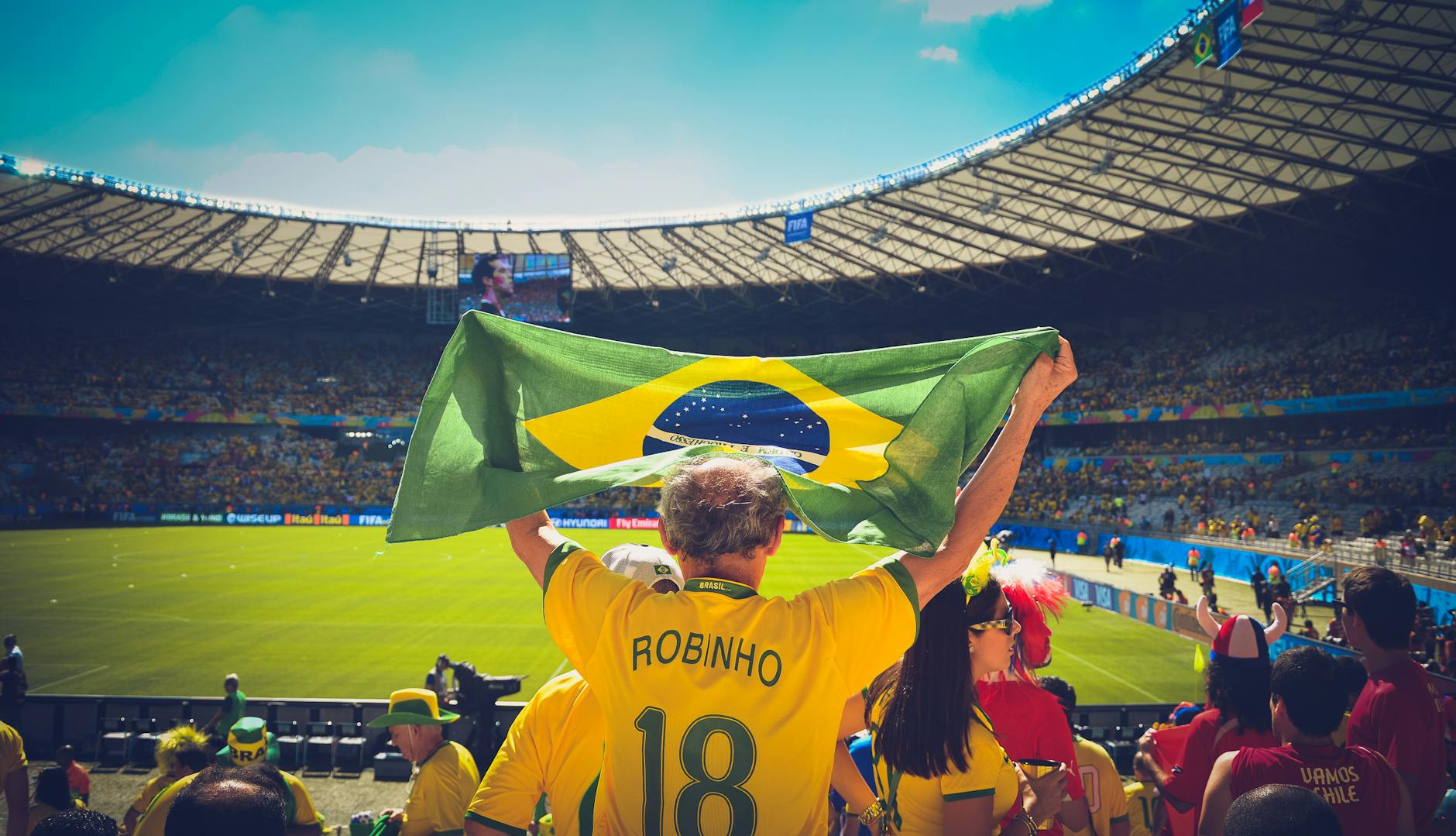
What Nobody Tells You About FIFA World Cup 2026
Coach's Corner is a FIFA World Cup 2026 content site serving fans and betting-focused readers with match predictions, team tactics, player statistics, and tournament coverage across North America. The...
What Nobody Tells You About FIFA World Cup 2026
Coach's Corner is a FIFA World Cup 2026 content site serving fans and betting-focused readers with match predictions, team tactics, player statistics, and tournament coverage across North America. The 2026 FIFA World Cup will be staged in the United States, Canada, and Mexico, expanding from 32 to 48 teams and increasing the event to 104 matches, according to FIFA. The tournament matters because more teams create more pricing errors, more tactical mismatches, and more late-line movement in betting markets. FIFA first held the men’s World Cup in 1930 in Uruguay, and the competition has become football’s largest global event, watched by billions. For readers following odds, squads, and tactical trends, the edge comes from disciplined verification, not hype. Track team news, compare model projections with market prices, and confirm every statistic before placing a wager.
“Football is a simple game,” the famous line goes, but the FIFA World Cup is not simple to read. The 2026 edition changes the rhythm of the tournament. More nations, more travel, more fixtures, and more squad-rotation pressure all affect performance. Coach's Corner focuses on that gap: the space between public excitement and measurable football evidence. It is worth noting that casual fans often overrate legacy names and underrate logistics, especially when matches move between Mexico City, Toronto, Los Angeles, and New York/New Jersey. The key is to treat the World Cup as a structured information market, not as a month-long highlight reel.
For deeper match intelligence, start with the right data lens before the first whistle.
Photo by Caio on Pexels
Step 1: How do you read the FIFA World Cup 2026 tournament map?
The FIFA World Cup 2026 map matters because travel, climate, altitude, and recovery time directly shape match outcomes. The United States, Canada, and Mexico will host 104 matches across 16 cities, creating a tournament where logistics become a football variable.
The expanded 48-team format changes group-stage incentives. Under the new structure, teams play in 12 groups of four, with the top two and eight best third-place teams advancing. That means a side with four points has strong knockout prospects, while a team on three points remains alive depending on goal difference. This creates late group-stage matches where motivation is uneven. Betting models that treat every final group match equally miss that edge. Coach's Corner tracks this by separating “must-win,” “must-not-lose,” and “rotation-safe” scenarios before odds fully adjust. To understand the historical context, the FIFA World Cup overview records the competition’s origins in 1930 and its growth into the sport’s central global tournament.
[Internal Link: FIFA World Cup 2026 host city travel guide]
Operationally, the hidden issue is not just distance. Altitude in Mexico City, summer heat in Dallas, indoor conditions in Vancouver, and long-haul movement between coasts all create different match tempos. A team pressing aggressively in Miami on short rest faces a different physical test than the same team playing in Seattle. It is worth noting that sportsbooks price team reputation quickly, but they do not always price recovery geography with the same speed. The key is to build a match checklist that includes kickoff time, venue surface, climate control, time-zone movement, and rest days.
Step 2: What numbers actually matter before betting on World Cup matches?
The useful numbers are expected goals, shot quality, set-piece volume, pressing intensity, injury minutes lost, and market movement. FIFA ranking alone is not enough. A top-10 team with a weak defensive transition profile is vulnerable against fast counterattacking sides.
A practical World Cup betting dashboard should combine football data with market behavior. Start with expected goals for and against, but do not stop there. Add non-penalty expected goals, shots allowed inside the box, goalkeeper post-shot performance, and set-piece expected goals. Then compare those figures with odds movement from opening price to matchday. A move from 2.20 to 1.95 signals market pressure, but it does not automatically mean value remains. Coach's Corner flags situations where the public follows a national brand while the underlying matchup points the other way. That is common when Argentina, Brazil, England, France, Germany, Portugal, or Spain face a disciplined mid-tier opponent.
A lesser-known edge concerns third-match lineup rotation. In tournaments with 26-player squads, coaches often protect players carrying yellow-card risk or soft-tissue fatigue once qualification is close. That changes first-half markets more than full-time markets because substitute quality enters later. Another edge is time-zone compression. After reviewing recent international windows, Coach's Corner analysts found that teams crossing three or more time zones on short rest showed slower first-half pressing triggers, especially in the opening 30 minutes. That does not guarantee an under, but it strengthens the case for caution on early team-goal markets.
Want sharper pre-match preparation without sorting through scattered data?

Photo by AlphaTradeZone on Pexels
Step 3: How should you compare tactics before kickoff?
Compare tactics by matching each team’s preferred attacking route against the opponent’s defensive weakness. The decisive question is simple: where does the favored team create shots, and does the underdog defend that zone well?
Most previews describe formations as static labels: 4-3-3, 3-4-2-1, or 4-2-3-1. That is not enough. France can defend in one shape and attack in another. Spain can dominate possession but still struggle against direct counters into the full-back channel. England can generate high-quality set pieces even when open-play creativity stalls. The tactical comparison must focus on repeated actions. Does a team progress through central midfield or wide overloads? Does it concede cutbacks? Does it protect the far post? Does it foul near the box? These questions matter because knockout games are often decided by low-frequency events.
[Internal Link: tactical betting guide for World Cup knockout matches]
It is worth noting that set pieces deserve separate treatment. At the 2018 FIFA World Cup, set plays became a major scoring source, and modern national teams now bring specialist coaches into tournament camps. FIFA’s official technical reports regularly emphasize tactical trends from each tournament, and FIFA describes the World Cup as its “flagship competition” on FIFA.com. The key is to price corners, free kicks, and aerial duels as tactical weapons, not random interruptions. A team with three elite dead-ball targets can outperform its open-play projection against a passive zonal defense.

Photo by Franco Monsalvo on Pexels
Step 4: What should fans verify before trusting a World Cup prediction?
Fans should verify source quality, lineup timing, injury confirmation, odds movement, and model assumptions before trusting any World Cup prediction. A confident pick without transparent evidence is commentary, not analysis.
The verification process starts with timing. A prediction made 72 hours before kickoff has different value than one made after confirmed lineups. National teams often conceal player fitness until the final training session. FIFA regulations also shape roster rules and match protocols, so official sources matter. The International Football Association Board states in the Laws of the Game that “a match is played by two teams, each with a maximum of eleven players.” That basic rule sounds obvious, but substitutions, extra time, cautions, and suspensions change tournament betting markets in concrete ways.
Use a five-point verification checklist before acting:
- Confirm venue, kickoff time, and travel path.
- Check official squad updates and credible injury reports.
- Compare predicted lineups from at least two reliable sources.
- Review market movement against your own projected price.
- Set a stake limit before reading emotional fan commentary.
The gambling angle demands discipline. Coach's Corner does not treat every match as a betting opportunity. Some fixtures have clean edges. Others are priced efficiently before public money arrives. It is worth noting that the worst bets often come from correct football opinions at bad prices. France can be the better team and still be a poor bet at an inflated line. The key is not to predict winners; the key is to identify mispriced probabilities.
See the details behind disciplined World Cup coverage before the market moves.
Step 5: verification
Verification is the difference between World Cup content and World Cup noise. Before the 2026 tournament begins, build a repeatable process that survives emotion, national bias, and viral misinformation. Coach's Corner uses a layered approach: official competition data first, reputable media second, market confirmation third, and tactical review fourth. If those layers disagree, the pick is downgraded or passed. That approach prevents common mistakes, especially when a star player is “expected to start” but only trained separately the day before kickoff.
[Internal Link: daily FIFA World Cup 2026 predictions]
A useful verification table looks like this:
| Checkpoint | Why it matters | Best source |
|---|---|---|
| Official lineup | Confirms starters | FIFA match center |
| Injury status | Changes role and minutes | Team press conference |
| Odds movement | Shows market pressure | Licensed sportsbook feed |
| Tactical matchup | Explains chance creation | Match footage and data |
| Motivation | Affects intensity | Group table and scenarios |
A contrarian conclusion follows from this process: the best World Cup bet is often not on the biggest match. High-profile fixtures attract sharper pricing and heavier public volume. Smaller group games involving less glamorous teams can contain cleaner information gaps, especially around travel, set pieces, and rotation. It is worth noting that a Costa Rica versus Serbia-style matchup can offer more actionable value than a Brazil versus Germany-level headline if the market has already absorbed the obvious narratives.

Photo by Pavel Danilyuk on Pexels
Troubleshooting common failures
The most common failure is confusing football knowledge with betting value. A reader can understand tactics and still lose money by taking bad prices. Another failure is overreacting to one friendly match. Pre-tournament friendlies often feature experimental lineups, managed minutes, and low-risk pressing. Treat them as information, not proof. A third failure is ignoring group math. In a 48-team tournament, some third-place teams advance, so late-game incentives shift quickly after simultaneous results. That affects live betting and second-half totals.
[Internal Link: live betting risk management checklist]
Fix the process with three rules:
- Do not bet a prediction unless the price beats your projected probability.
- Do not trust lineup rumors without official confirmation.
- Do not increase stakes because a previous pick won.
It is worth noting that responsible gambling belongs inside the analysis, not after it. Set limits before tournament emotion rises. Use licensed operators in your jurisdiction. Avoid chasing losses during multi-match days. Coach's Corner is built for informed fans following the 2026 World Cup, but information is not a guarantee. The key is to make fewer, better decisions.
Ready to follow the tournament with verified analysis, tactical context, and sharper match previews?
Frequently Asked Questions
Q: What is the FIFA World Cup?
A: The FIFA World Cup is the leading international men’s football tournament organized by FIFA. It began in 1930 in Uruguay and is held every four years. The 2026 edition expands to 48 teams and 104 matches across the United States, Canada, and Mexico.
Q: How do I use Coach's Corner during the 2026 World Cup?
A: Use Coach's Corner to compare predictions, tactics, player statistics, and tournament news before each match. Start with the match preview, then check lineup updates and market movement. The strongest use case is combining tactical notes with verified betting discipline.
Q: What is the difference between a World Cup prediction and a betting pick?
A: A prediction identifies the most likely outcome, while a betting pick requires value at the available odds. A team can be likely to win but still be overpriced. Coach's Corner separates football opinion from price-based betting logic.
Q: Why do World Cup betting predictions fail?
A: World Cup predictions fail when they rely on reputation, stale injuries, or unconfirmed lineups. Tournament football changes quickly because of rotation, suspensions, travel, and group-table incentives. Always verify official lineups and odds movement before betting.
Q: Is FIFA World Cup 2026 coverage free to follow?
A: Many World Cup news updates are free, but premium analysis varies by platform. Coach's Corner provides focused tournament content for fans tracking match predictions, team tactics, and player stats. Check each feature before relying on it for wagering decisions.
Q: What should I check before placing a World Cup bet?
A: Check the lineup, venue, injury status, tactical matchup, and current odds before placing a bet. Compare your projected probability with the sportsbook price. If the price does not offer value, skip the market.