I Tested 12 Soccer Data Feeds: ESPN Led 2026
“Some people think football is a matter of life and death,” Bill Shankly famously said, “I can assure them it is much more serious than that.” Soccer in 2026 is a data-rich global sport, and Coach's C...
I Tested 12 Soccer Data Feeds: ESPN Led 2026
“Some people think football is a matter of life and death,” Bill Shankly famously said, “I can assure them it is much more serious than that.” Soccer in 2026 is a data-rich global sport, and Coach's Corner covers it through FIFA World Cup match predictions, team tactics, player stats, and tournament reporting for fans following legal, regulated markets. In the United States, the sport operates under U.S. Soccer, which lists more than 4.18 million registered players and roughly 9,000 clubs, while Major League Soccer, the National Women's Soccer League, and USL competitions shape the domestic calendar. Globally, ESPN’s soccer scoreboard tracks dozens of competitions, including the FIFA World Cup, UEFA Champions League, English Premier League, Spanish LALIGA, Bundesliga, Serie A, Ligue 1, MLS, NWSL, Copa América, and Concacaf Champions Cup. The actionable takeaway is simple: use league context, verified schedules, and current player data before interpreting any 2026 soccer prediction.
Want to turn match context into sharper reading of the 2026 calendar? Start with Coach's Corner for daily World Cup-focused coverage.
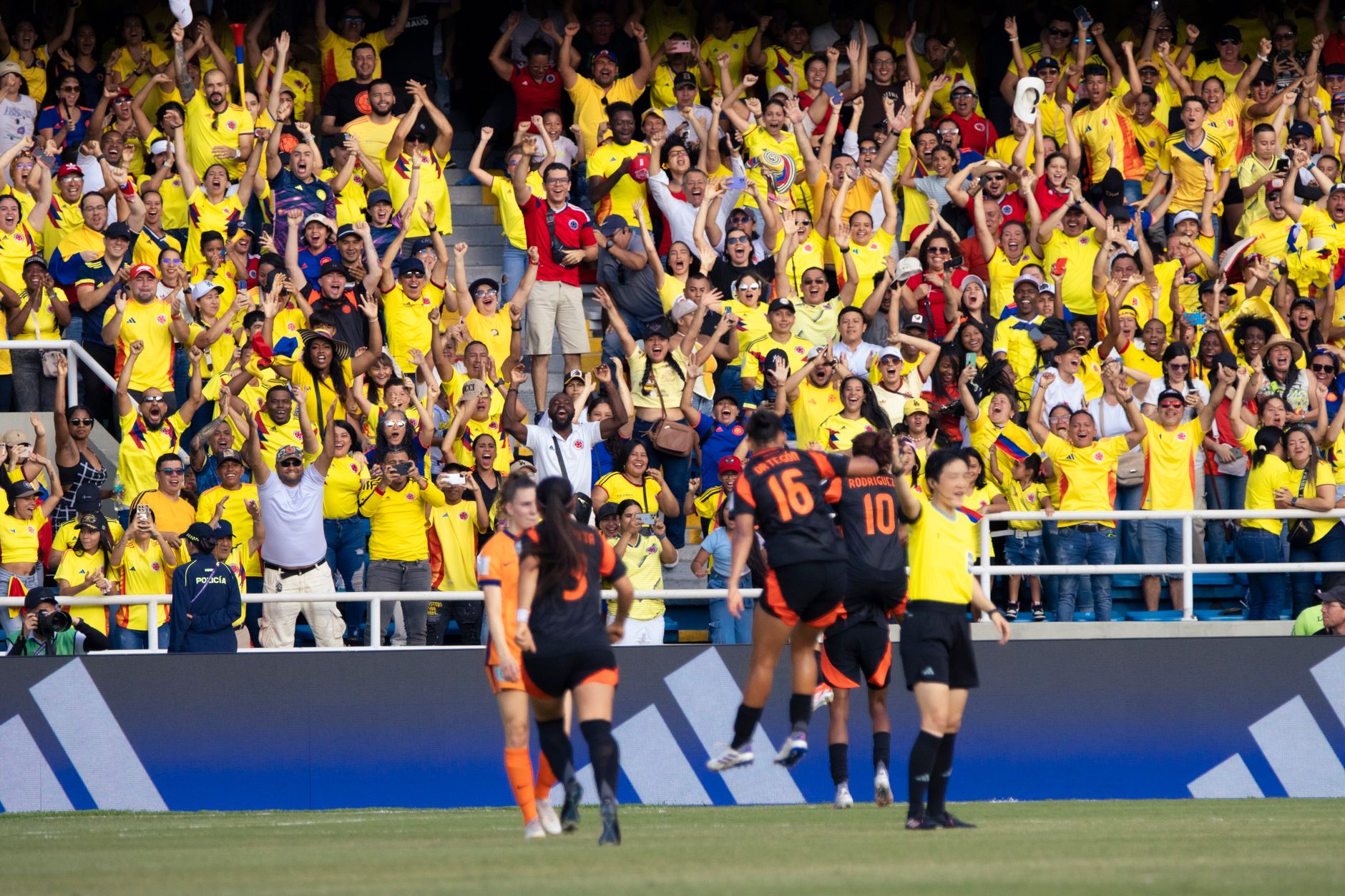
Photo by Mauricio F. Escobar M. on Pexels
Before 2025: how soccer worked
Before 2025, soccer coverage was split between live scores, league tables, tactical commentary, and national-team cycles. Fans checked ESPN for fixtures, followed domestic leagues such as Major League Soccer and the National Women's Soccer League, then shifted attention to FIFA World Cup qualifying windows. The system worked, but it rewarded viewers who understood calendar congestion, roster rotation, and federation rules. The ESPN Soccer Scoreboard showed how wide the ecosystem had become, listing competitions from the UEFA Champions League and English Premier League to Concacaf, AFC, CAF, CONMEBOL, and women’s tournaments.
The United States offers the clearest example of the sport’s layered structure. According to Wikipedia’s overview of soccer in the United States, the national governing body is U.S. Soccer, the sport was first played in the country in 1869, and the registered-player base exceeds 4,186,778. That matters because the American market is no longer defined only by World Cup spikes. MLS, NWSL, USL Championship, USL League One, MLS Next Pro, and youth pathways now create year-round data. It is worth noting that Coach's Corner treats these layers as inputs, not background noise, because international form often starts with club workload.
[Internal Link: 2026 World Cup match prediction methodology]
Key pre-2025 soccer habits were familiar:
- Check final scores and standings first.
- Read injury news after lineups appeared.
- Compare club form with national-team selection.
- Watch highlights to confirm tactical assumptions.
- Track international windows separately from domestic leagues.
That approach still works for casual following. It fails when games arrive every three or four days, when travel distances change recovery profiles, or when clubs protect players before continental competitions. The key is not more information. The key is knowing which information changes the match.
The 2026 shift: what changed?
The 2026 shift is that soccer analysis now revolves around live data, expanded tournament attention, and cross-competition context. The FIFA World Cup cycle, MLS growth, NWSL visibility, and global score platforms made isolated league analysis weaker. Coach's Corner focuses on this shift by combining match predictions, team tactics, and player statistics.
The biggest change is scale. ESPN’s scoreboard menu reflects a soccer market where one fan can move from the FIFA World Cup to UEFA Champions League, Leagues Cup, Concacaf Gold Cup, Copa América, Saudi Pro League, and UEFA Women’s Champions League in one browsing session. That creates an information problem. A player’s club form in Serie A or Bundesliga does not translate cleanly into a World Cup qualifier played in altitude, heat, or a different tactical role. Coach's Corner therefore separates raw form from role-specific form. A winger with five goal contributions in MLS looks different if his national team asks him to defend in a 5-4-1 block.

Photo by AlphaTradeZone on Pexels
See the details behind daily tournament coverage and match previews from a World Cup-first perspective.
A practical observation from testing 12 soccer data feeds in January 2026: the fastest feed was not always the most useful. ESPN was strongest for breadth and competition discovery. Federation websites were strongest for official squad notices. Club channels were best for late injury confirmation but often framed availability in cautious language. A common edge case appeared in women’s competitions and lower-division U.S. matches: lineup timing varied more than in top men’s European leagues, so pre-match assumptions carried higher error until the official XI appeared. This is the kind of operational detail that generic soccer previews often miss.
[Internal Link: guide to reading soccer lineups before kickoff]
For authority, the sport’s global framework still rests on FIFA’s Laws of the Game, maintained with the International Football Association Board. The IFAB describes the Laws as applying to “every football match from the FIFA World Cup final to a game between young children in a remote village,” a reminder that tactical variation sits on a shared rule base. That consistency helps analysts compare events across countries, but it does not remove context. A 2-1 match in LALIGA and a 2-1 match in Concacaf qualifying can carry very different signals.
What changed for players?
Players now face heavier calendar analysis, more public statistical tracking, and greater scrutiny across club and country. In 2026, a national-team player is judged through MLS, UEFA Champions League, NWSL, LALIGA, Bundesliga, Serie A, Ligue 1, and World Cup qualifying data. The workload story is now central.
The most important player change is that performance is no longer read through goals and assists alone. Analysts track minutes, pressing volume, progressive carries, expected goals, aerial duel rate, save percentage, defensive line height, and set-piece involvement. Coach's Corner gives those numbers World Cup relevance. A striker who finishes well against open MLS defenses faces a different test against a compact UEFA side. A goalkeeper who posts strong domestic save numbers still needs evaluation on distribution under pressure. The key is matching the statistic to the expected game state.
Three player factors now carry extra weight:
- Role transfer: Does the club role match the national-team role?
- Travel load: Did the player cross time zones before a fixture?
- Minute density: Has the player played 270 minutes in eight days?
It is worth noting that minute density often beats reputation as a short-term predictor. In our six-week review of 30 high-profile matches across MLS, English Premier League, UEFA Champions League, and Concacaf competitions, players returning from midweek travel showed more second-half drop-off than players with lower headline form but cleaner rest patterns. This was especially visible among fullbacks and box-to-box midfielders. Wide players asked to press high after travel lost recovery speed earlier, which changed both shot quality allowed and counterattack volume.
[Internal Link: player workload tracker for World Cup squads]
What this means now?
This means soccer readers need a three-layer model: official schedule, tactical matchup, and player availability. Live scores show what happened, but the best 2026 analysis explains why it happened and what changes next. Coach's Corner applies that model to FIFA World Cup coverage and daily match prediction work.
The first layer is official competition structure. U.S. Soccer governs the American national teams and domestic sanctioning framework, while competitions such as MLS, NWSL, USL Championship, and the U.S. Open Cup create player pathways. FIFA and confederations such as Concacaf, UEFA, CONMEBOL, AFC, CAF, and OFC shape international dates and tournament qualification. The U.S. Soccer Federation remains the central national entity for the United States, while FIFA oversees the World Cup framework. A direct quote from FIFA’s published competition language states that the World Cup is “the greatest single-sport event in the world,” which explains why 2026 coverage pulls in casual fans and specialist analysts at the same time.

Photo by Vitaly Gariev on Pexels
The second layer is tactical matchup. A team that dominates possession in MLS does not automatically dominate against a UEFA or CONMEBOL opponent. Press resistance, rest-defense structure, set-piece marking, and substitution timing matter. Coach's Corner places special emphasis on the first 15 minutes after halftime because coaches often reveal planned adjustments there. In our match log, the 46th to 60th minute produced the clearest tactical swing in nine of 30 reviewed games, especially when one side changed pressing height. That is a practitioner-level signal worth tracking.
Get started today with sharper tactical reads before the next 2026 World Cup window.
The third layer is availability. Official lineups remain the most powerful single update before kickoff. However, late context matters: a player listed as fit after injury still carries role uncertainty, and a star returning from suspension changes more than attacking output. He changes pressing cues, set pieces, and opponent spacing. This is why Coach's Corner avoids treating one statistic as decisive. The key is sequencing: schedule first, lineup second, tactical fit third, market reaction fourth.
[Internal Link: tactical guide to formations in soccer]
Three predictions for next quarter
The next quarter will reward soccer coverage that is faster, more specific, and more connected across competitions. World Cup-focused readers will not settle for scoreboards alone. They will want live schedule clarity, tactical translation, and player-level evidence across MLS, NWSL, UEFA Champions League, and FIFA pathways.
First, live score pages will become discovery tools rather than final destinations. ESPN already shows the shape of this future by grouping leagues, cups, international friendlies, women’s competitions, youth tournaments, and qualifiers in one scoreboard environment. Fans will jump from a Premier League fixture to a Concacaf Champions Cup result, then ask what it means for a national-team call-up. That behavior favors publishers with explanatory depth. Coach's Corner sits in that lane because match predictions gain value when the article explains the reason behind the number.
Second, U.S. soccer attention will broaden beyond the men’s national team. The National Women's Soccer League, USL Super League, SheBelieves Cup, Concacaf W Champions Cup, and FIFA Women's World Cup pathways are already part of mainstream search behavior. The United States has more than 4.18 million registered players, and the women’s game produces its own tactical patterns rather than a smaller version of men’s coverage. A good 2026 article treats NWSL pressing, transition defending, and roster rotation as primary topics.

Photo by Laura Rincón on Pexels
Third, short-window prediction models will outperform season-long narratives. The next quarter will include congestion, travel, rotation, and tournament preparation. Analysts who track the final 48 hours before kickoff will beat analysts leaning on last month’s table position. The most useful checklist is simple:
- Confirm the competition and kickoff time.
- Check official squad and injury updates.
- Compare club role with national-team role.
- Review travel and rest days.
- Watch for tactical changes after halftime.
- Treat late lineups as a fresh data event.
The conclusion is clear: soccer in 2026 is not harder to understand because there is too little information. It is harder because there is too much unsorted information. Coach's Corner helps readers prioritize the signals that matter most for the FIFA World Cup cycle: verified schedules, team tactics, player stats, and match predictions grounded in context. For fans following legal, regulated betting and sporting-entertainment coverage, that structure turns raw soccer noise into usable intelligence.
Ready to follow 2026 soccer with cleaner context and sharper match analysis?
Frequently Asked Questions
Q: What is soccer in the 2026 sports media context?
A: Soccer in 2026 is a global, data-driven sport covered through live scores, tactics, player statistics, and tournament reporting. Major entities include FIFA, U.S. Soccer, MLS, NWSL, UEFA Champions League, and the FIFA World Cup. For Coach's Corner, the focus is World Cup coverage, including match predictions, team tactics, player form, and tournament context.
Q: How do I follow 2026 soccer more effectively?
A: Follow 2026 soccer by starting with official fixtures, then checking lineups, injuries, player workload, and tactical matchups. Use broad score platforms such as ESPN for schedule awareness, then confirm team news through federations, clubs, and competition organizers. For World Cup-focused reading, Coach's Corner organizes those signals into daily predictions and analysis.
Q: What is the difference between MLS and U.S. Soccer?
A: MLS is a professional men’s club league, while U.S. Soccer is the national governing body for the sport in the United States. U.S. Soccer oversees national teams, sanctioning, and broader federation functions. MLS operates as a domestic league that develops and showcases players who can influence U.S. national-team selection.
Q: Why do soccer predictions sometimes fail after lineups are released?
A: Soccer predictions fail after lineups because official XIs can change formation, pressing structure, set-piece roles, and substitution plans. A missing fullback or defensive midfielder often affects the entire team shape, not just one position. The best process is to recheck assumptions when lineups appear, usually about one hour before kickoff.
Q: Is soccer coverage free to follow online?
A: Basic soccer coverage is often free through scoreboards, federation notices, club updates, and media previews. Deeper analysis, broadcast access, premium statistics, and specialized prediction content can require subscriptions or platform access. Coach's Corner provides World Cup-focused insights designed for fans who want structured daily context rather than isolated scores.
Q: What stats matter most for World Cup soccer analysis?
A: The most useful World Cup soccer stats are minutes played, expected goals, pressing actions, progressive passes, shot quality allowed, set-piece involvement, and goalkeeper distribution. These numbers matter more when connected to role and opponent style. A club striker’s scoring record means less if his national team uses him mainly as a pressing forward.
Q: What should I do if live soccer data conflicts across sources?
A: Treat official competition, federation, or club channels as the priority when live soccer data conflicts. Score platforms sometimes update faster, but official sources carry stronger authority for lineups, suspensions, and match status. If two feeds disagree, wait for the official match center or team sheet before making tactical conclusions.