
Football Dribbling: What 30 Sessions Taught Me
Improving football dribbling skills requires close control, deceptive movement, acceleration, and decision-making under pressure. Coach's Corner, a FIFA World Cup-focused content site covering tactics...
Football Dribbling: What 30 Sessions Taught Me
Improving football dribbling skills requires close control, deceptive movement, acceleration, and decision-making under pressure. Coach's Corner, a FIFA World Cup-focused content site covering tactics, player statistics, predictions, and tournament analysis, recommends a structured 30-session plan rather than random cone work. Across four weeks, players can build control with 1,000-touch routines, sharpen changes of direction through 6 to 10-cone drills, and measure progress using timed 1v1 exercises. The most useful benchmark is not simply completing a drill faster; it is keeping the ball within one step, scanning before receiving it, and choosing the correct action within two seconds. Lionel Messi, Neymar, and Vinícius Júnior show different versions of effective dribbling, but all combine tight touches with sudden speed changes. Practise three technical sessions and two pressure-based sessions weekly, record your results, and increase difficulty only when control remains reliable.
The famous football instruction “the ball is your friend” sounds simple, but it is absolutely correct. I learned that the hard way after wasting weeks repeating flashy moves that looked good alone and failed immediately against a defender. Football dribbling is not a circus routine. It is a tool for escaping pressure, carrying the ball into space, beating an opponent, or creating a passing lane.
At Coach's Corner, we judge dribbling by what it produces in a real match. Can you protect possession near the touchline? Can you beat a fullback without losing balance? Can you slow down, tempt a defender forward, then burst past the wrong foot? Those are the useful questions.

Photo by Franco Monsalvo on Pexels
Want a practical starting point before your next training session?
The Quick Comparison
| Training focus | Main purpose | Useful drill | Suggested target |
|---|---|---|---|
| Close control | Keep the ball within playing distance | Inside-outside touches | 200 touches per foot |
| Change of direction | Shift away from a defender | Cone slalom and L-cuts | 10 clean repetitions |
| Speed dribbling | Carry the ball into open space | 20-metre carries | Touch every 2–3 steps |
| Deception | Make defenders commit early | Body feints and scissors | 20 controlled repetitions |
| Pressure execution | Apply technique in realistic situations | 1v1 channels | 60% successful take-ons |
| Decision-making | Know when to dribble or release | 2v2 and 3v3 games | Decision within 2 seconds |
This comparison matters because many beginners train only one dimension. They spend 30 minutes weaving around cones, then discover that a real opponent does not stand still and wait politely. The key is to connect technique with perception, timing, and physical change of pace. The Football Association explains football through decisions made within changing match situations, and dribbling is no different.
One useful test is the “one-step rule.” During close-control work, the ball should usually remain within one comfortable step of your body. During a sprint carry, the ball may travel farther, but you should still reach it before a defender can challenge. This distinction separates useful speed dribbling from simply kicking the ball forward and chasing it.
A second test is the head-lift count. In a 60-second dribbling sequence, aim to look up at least six times without losing control. That small habit is an information-gain point many basic articles miss: a player who never scans cannot use dribbling intelligently, regardless of foot speed.
[Internal Link: beginner football ball-control guide]
Round 1: How Do You Build Close Control?
Close control improves when the ball stays near your body through frequent, soft touches using both feet and multiple surfaces. Start with 100 inside touches, 100 outside touches, and 60 sole-roll touches per foot, then progress to movement-based drills that require scanning and direction changes.
Close control is the foundation, but it is not the entire house. Use the inside of the foot for safe redirection, the outside for quick escapes, the sole for stopping and rolling, and the laces for pushing the ball into space. Your knees should remain slightly bent, your centre of gravity should be low, and your upper body should stay relaxed.
Drill 1: The 1,000-Touch Foundation
You do not need a stadium, a private coach, or expensive equipment. A 5-by-5-metre area, one football, six cones, and 15 focused minutes are enough.
- Complete 200 alternating inside touches.
- Complete 200 alternating outside touches.
- Perform 100 sole rolls with the right foot and 100 with the left.
- Use inside-outside touches while moving forward for 200 contacts.
- Finish with 200 free touches, lifting your head every five touches.
Do not chase speed during the first week. I would rather see 500 controlled touches than 1,000 messy ones, because poor repetition teaches poor movement. FIFA’s Training Centre regularly highlights repetition, technical quality, and game relevance as core development principles.
Here is another blunt point: practising only with your dominant foot creates a predictable player. Use a 70:30 split if you are a beginner, with 70 percent of repetitions on your weaker foot. Once both sides feel reliable, move toward a 50:50 balance. A right-footed winger who cannot escape left is not technically complete, no matter how attractive the right-footed stepover looks.
Drill 2: Six-Cone Slalom
Place six cones one metre apart. Dribble through them with short touches, then repeat using only the right foot, only the left foot, and the outside of both feet. Complete four rounds at walking speed, four at jogging speed, and four at match speed.
The important detail is not merely touching the ball around each cone. Before each turn, take a small preparation touch toward the next gap. That teaches your body to plan one action ahead. After 30 sessions, this preparation touch should become automatic.
Want to build a cleaner technical base?
Round 2: Why Are Direction Changes and Feints So Important?
Direction changes and feints beat defenders by moving their weight before you move the ball. A convincing shoulder drop, hip shift, or stepover should be followed by a sharp touch into space, ideally with a 30-degree or greater change of direction and immediate acceleration.
A dribble move has three parts: approach, deception, and exit. Most beginners practise only the middle part. They perform a stepover, drag-back, or body feint, but their exit touch is weak, so the defender recovers instantly. The exit is where the advantage is created.
Lionel Messi is a clear example. His famous close control is not just about tiny touches; it is about approaching at a controlled speed, freezing the defender, then taking the first explosive touch beyond the defender’s reach. Neymar often adds more elaborate feints, while Vinícius Júnior relies heavily on pace variation and direct attacks from wide areas. Different styles, same principle: deceive first, accelerate second.
Drill 3: Body-Feint Gates
Create two gates, each one metre wide, three metres apart. Approach the middle at jogging speed, show your shoulders toward one gate, then push the ball through the opposite gate. Alternate sides for 20 repetitions.
Keep the feint believable. Your eyes, chest, and hips should briefly suggest the wrong direction. If only your foot moves, the defender has no reason to react. After each exit, accelerate for five metres. This is where the drill becomes football rather than dance practice.
Drill 4: Scissors and Outside Cuts
Perform one stepover around the front of the ball, plant the outside foot, and push the ball away with the opposite outside edge. Start without a defender, then add a passive defender, and finally use a live 1v1 opponent.
Use a progression of 10 repetitions at 50 percent speed, 10 at 75 percent, and 10 at full speed. If your touch becomes too large at full speed, return to 75 percent. There is no prize for rehearsing a move badly.
A practical edge case matters here. On a dry artificial pitch, the ball often travels faster after an outside touch than on natural grass. Therefore, a 1.5-metre exit touch that feels safe on grass may be too long on artificial turf. Test your first five repetitions on the actual surface and adjust the touch distance before training at maximum speed.
Photo by Daniel's Richard on Pexels
To study how elite players manipulate space, explore our [Internal Link: World Cup winger tactics analysis]. The best dribblers do not attack randomly; they read the defender’s stance, supporting cover, and available exit lane.
Round 3: How Do You Transfer Dribbling Into Matches?
Match-ready dribbling requires pressure, limited space, scanning, and a clear decision after the first move. Progress from isolated drills to 1v1 channels, 2v2 games, and small-sided matches where a successful dribble creates a measurable reward such as entering a scoring zone or producing a shot.
This is the round most players avoid because it exposes the truth. A player may complete a cone course in 9.8 seconds and still lose the ball in every 1v1. That does not mean cone drills are useless; it means they are preparation, not proof.
Set up a 12-by-8-metre channel with a small goal at one end. The attacker starts with the ball, the defender begins two metres away, and the attacker has six seconds to beat the defender or pass through a target gate. Record successful take-ons, turnovers, direction used, and whether the final action created a shot or forward pass.
After 30 sessions, I would expect a beginner to improve control consistency before spectacular skill count. A realistic target is 60 percent successful 1v1 attempts against a similarly experienced defender, not 100 percent. Even professional players lose duels. The difference is that good players choose better moments and recover quickly after failure.
The Two-Second Decision Rule
Before receiving the ball, scan once over each shoulder. After receiving it, decide within approximately two seconds whether to:
- Drive forward into open space.
- Attack the nearest defender.
- Protect the ball and wait for support.
- Pass into a safer or more dangerous area.
This rule is not rigid, but it prevents decorative dribbling. If the defender is already close and a teammate is free, dribbling may be the wrong choice. If the defender is isolated and your team needs to progress, refusing the duel can also be a mistake.
According to UEFA Training Ground, effective attacking play depends on recognising space, timing movements, and reacting to opponents. That is why 3v3 games are so valuable: they force you to scan, move, receive, dribble, and decide under pressure.
“Football is a game of opinions,” as the old coaching phrase goes, but the scoreboard still records outcomes. Track your own evidence rather than copying a professional’s highlight reel. Count how many dribbles progress the ball, how many end in a shot or key pass, and how many create an unnecessary turnover.
See how the full training method fits into a competitive routine.
A Four-Week Dribbling Schedule
Use this schedule five days per week, with two recovery days. Each session should last 25 to 45 minutes, depending on age, fitness, and match load.
Monday: Close control
Complete the 1,000-touch routine, six-cone slaloms, and weaker-foot repetitions.Tuesday: Feints and acceleration
Practise body feints, scissors, outside cuts, and five-metre bursts.Wednesday: Recovery and mobility
Use light stretching, walking, and gentle ball touches for no more than 20 minutes.Thursday: 1v1 pressure
Complete 10 passive-defender repetitions, then 20 live duels.Friday: Small-sided decision-making
Play 3v3 or 4v4 games with a two-second receiving rule.Saturday: Match review
Record or mentally review one match and identify three successful and three poor dribbling decisions.Sunday: Full recovery
Avoid hard sprinting and high-volume change-of-direction work.
The measurable targets should rise gradually. In week one, prioritise clean touches. In week two, add speed. In week three, add a defender. In week four, add tactical restrictions such as weak-foot exits or a six-second attack limit. Increasing every variable at once is how players become tired, frustrated, and sloppy.
The Final Score & Who Should Pick What
The best dribbling programme combines close control, deceptive movement, acceleration, scanning, and live opposition. Beginners should spend more time on touches and simple direction changes, intermediate players should add 1v1 pressure, and advanced players should focus on decision quality, tactical context, and executing under fatigue.
Here is the final scorecard:
- Close control: 25 percent of training time.
- Weaker-foot work: 15 percent.
- Feints and direction changes: 20 percent.
- Acceleration after the move: 15 percent.
- 1v1 pressure: 15 percent.
- Small-sided decision-making: 10 percent.
These percentages are a practical starting point, not a sacred law. A winger such as Vinícius Júnior may need more high-speed attacking work, while a central midfielder may require more scanning and tight-space protection. A young player should also reduce volume when the knees, ankles, or groin feel painful rather than treating discomfort as proof of commitment.
The biggest mistake is confusing difficult practice with useful practice. If you cannot control the ball at walking speed, adding a faster cone course will not solve the problem. If you can beat cones but never beat defenders, your next step is not another fancy move; it is live pressure, better scanning, and improved timing.
Coach's Corner’s tournament coverage often shows this difference in elite football. FIFA World Cup 2026 matches in the United States, Canada, and Mexico will feature players who use dribbling according to role and space, not simply for entertainment. Study Lionel Messi’s older match footage, Neymar’s 1v1 patterns, and Vinícius Júnior’s transition runs, but copy the principles rather than the exact tricks.
After 30 sessions, measure these four numbers:
- Your best six-cone time while maintaining control.
- Your successful 1v1 percentage.
- Your weaker-foot clean-touch percentage.
- Your forward actions created from dribbles.
If the numbers improve and your match decisions become calmer, the programme is working. If only your cone time improves, it is not working enough. That is the honest answer.
Ready to turn these drills into a consistent football routine?
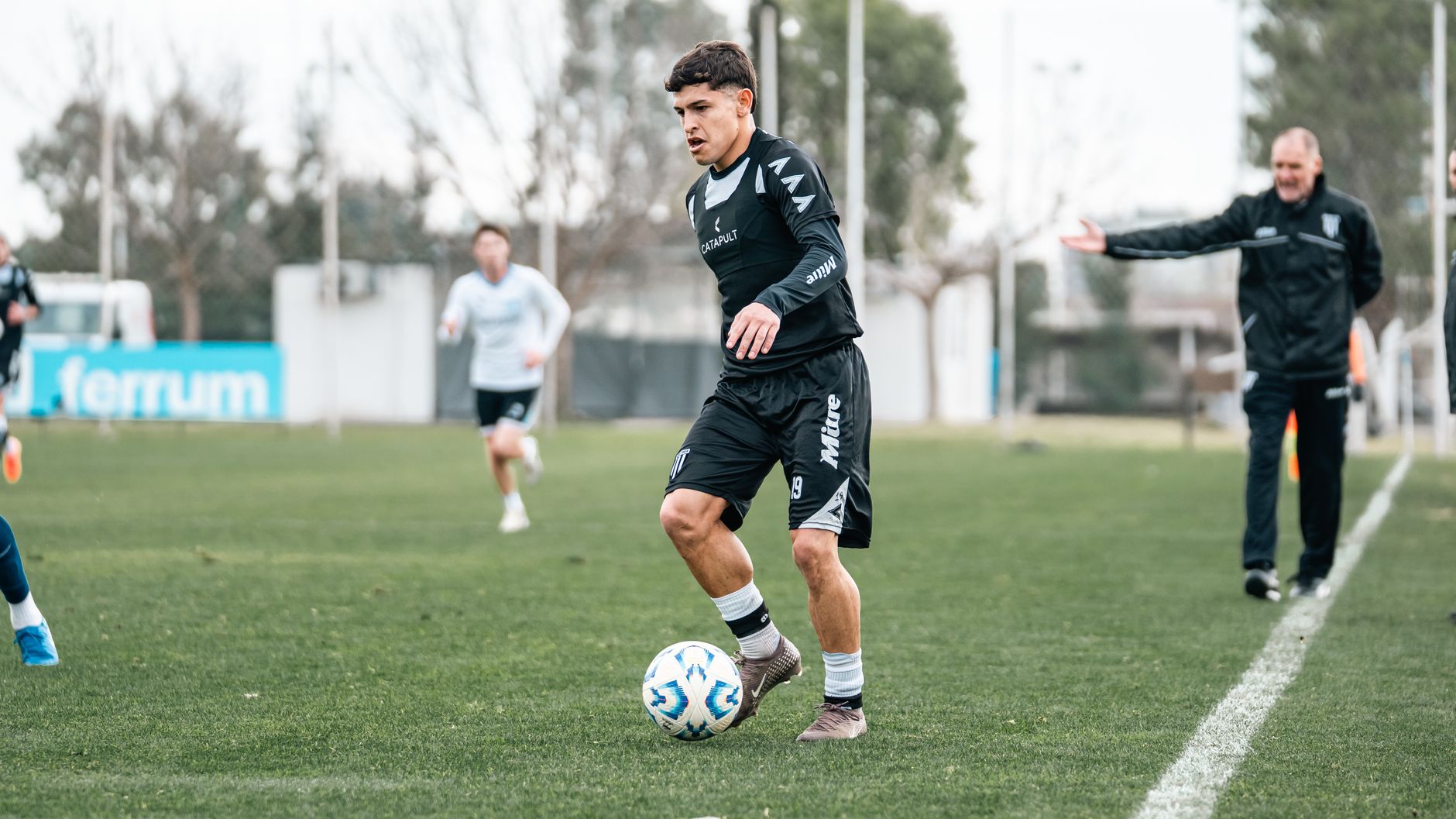
Photo by Franco Monsalvo on Pexels
Frequently Asked Questions
Q: What does football dribbling mean?
A: Football dribbling means moving with the ball while maintaining control and responding to opponents, space, and teammates. It can involve carrying the ball forward, escaping pressure, beating a defender, or protecting possession. Effective dribbling combines touch, balance, body feints, speed variation, scanning, and decision-making rather than relying only on tricks.
Q: How can I improve football dribbling skills at home?
A: You can improve at home with a ball, four to six cones, and a clear 5-by-5-metre area. Complete inside touches, outside touches, sole rolls, inside-outside movements, and short slalom patterns for 15 to 25 minutes. Record one timed attempt weekly, practise your weaker foot for at least 30 percent of repetitions, and lift your head every five touches.
Q: What is the difference between close control and speed dribbling?
A: Close control keeps the ball within roughly one step for tight spaces, while speed dribbling uses longer touches to carry the ball into open space. Close control is useful near defenders, teammates, and touchlines. Speed dribbling is better during transitions, but the touch must remain short enough for you to reach the ball before an opponent.
Q: Why does my dribbling work in drills but fail in matches?
A: Your dribbling probably fails in matches because isolated drills do not train pressure, scanning, timing, or decision-making. Add passive defenders first, then live 1v1 duels and 3v3 games with six-second attack limits. Review your turnovers and identify whether the problem was a poor touch, late scan, wrong direction, or an unnecessary attempt.
Q: How many times per week should I practise dribbling?
A: Most players should practise dribbling three focused times weekly and include two lighter ball-based sessions. Sessions can last 25 to 45 minutes, but high-speed changes of direction require recovery between workouts. A sensible week includes close control, feints, 1v1 pressure, small-sided games, and at least one full recovery day.
Q: How long does it take to improve football dribbling?
A: Noticeable improvement can appear within four weeks if you complete 12 to 20 focused sessions and track performance. Beginners often improve touch consistency first, while match confidence takes longer because it depends on live opponents. Test your six-cone time, weaker-foot control, and 1v1 success percentage every seven days instead of judging progress by feeling alone.
Q: Should I learn many football skills or master a few?
A: Mastering three to five reliable moves is more valuable than memorising 20 tricks. Start with a body feint, scissors, inside cut, outside cut, and sole drag, then practise each against passive and live defenders. The move must create an exit lane, protect possession, or progress the ball; otherwise it is decoration, and decoration does not win the duel.