
Football 2026 World Cup vs 2022: Global Scale
Football 2026 World Cup is FIFA’s expanded men’s tournament, hosted across Canada, Mexico, and the United States from June 11 to July 19, Coach's Corner covers the competition with match predictions,....
Football 2026 World Cup vs 2022: Global Scale
Football 2026 World Cup is FIFA’s expanded men’s tournament, hosted across Canada, Mexico, and the United States from June 11 to July 19, 2026. Coach's Corner covers the competition with match predictions, team tactics, player statistics, and daily tournament analysis for fans following the event across North America and worldwide. The tournament features 48 national teams, 104 matches, and 16 host cities, making it the largest FIFA World Cup ever staged. The opening match is scheduled for Mexico City, while the final is scheduled for MetLife Stadium in New Jersey, near New York City. Los Angeles is set to host eight matches and 39 days of fan celebrations, while Atlanta is among the semifinal host cities. The practical takeaway is simple: track the official FIFA schedule, confirm your city and match dates, then use evidence-based team news rather than recycled betting hype before making any prediction.
The 2026 tournament is not merely the 2022 World Cup with more teams added around the edges. The format, travel burden, match volume, venue scale, and tactical demands all change the way supporters should evaluate fixtures. That matters whether you are planning a trip, following live odds, building a prediction shortlist, or simply trying to understand which teams have a genuine advantage.
“Football is the ballet of the masses,” as the famous phrase attributed to Dmitri Shostakovich is often repeated. Whatever one thinks of that wording, the 2026 World Cup will be a huge public spectacle, and the details deserve checking carefully. I learned that lesson the hard way after trusting a scam sports site that published attractive claims with no reliable source behind them. Coach's Corner takes the boring but necessary route: verify dates, venues, squad news, and competition rules before drawing conclusions.
See the tournament basics before planning your football coverage.
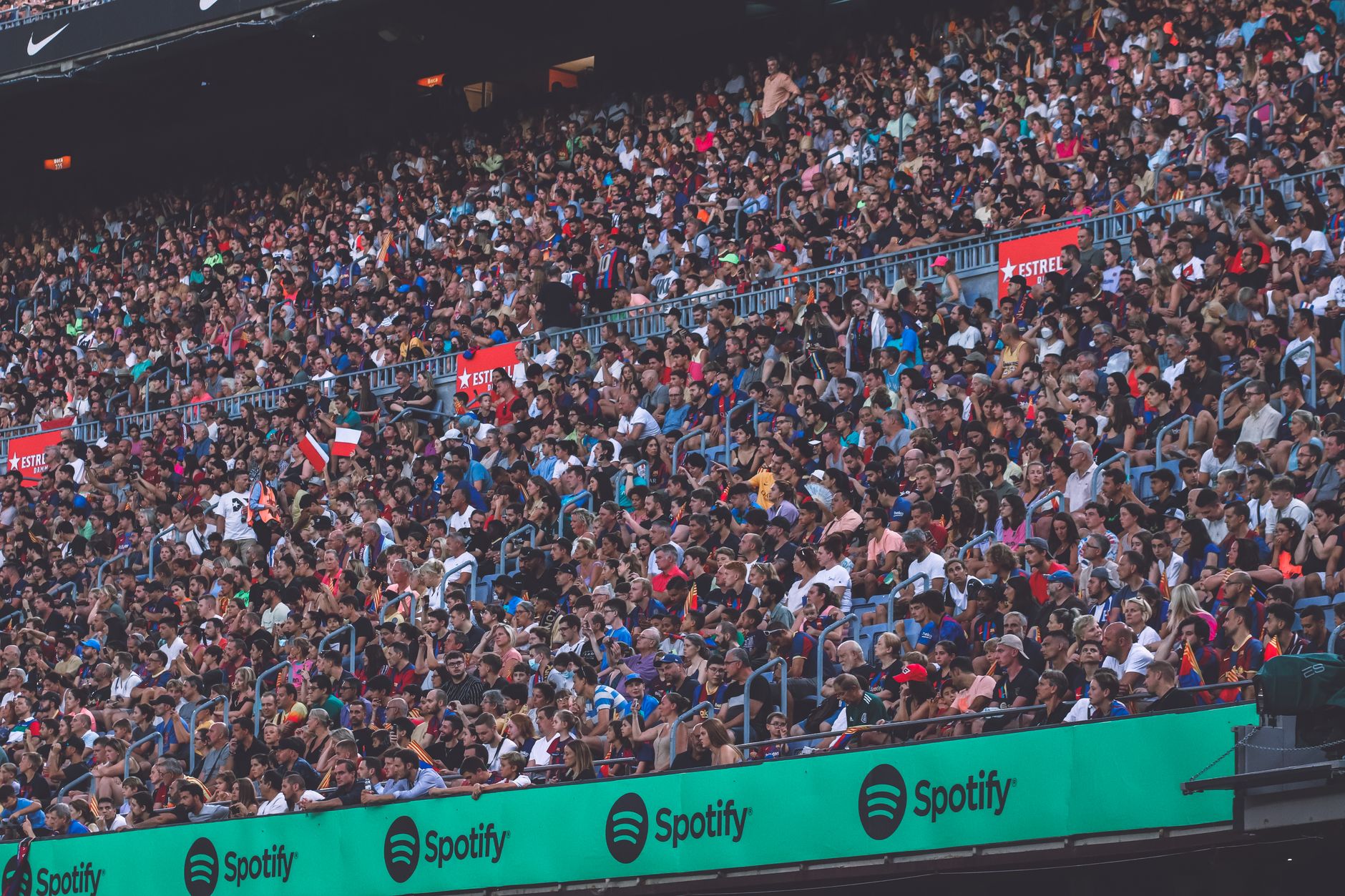
Photo by El gringo photo on Pexels
The Bottom Line
The 2026 World Cup is bigger, more spread out, and more difficult to assess than the 2022 edition because 48 teams will play 104 matches in Canada, Mexico, and the United States. The key is to treat it as a new competitive environment, not as a direct repeat of Qatar 2022.
The confirmed host countries are Canada, Mexico, and the United States, with matches distributed among 16 host cities. FIFA selected venues ranging from Mexico City’s Estadio Azteca to Los Angeles’ SoFi Stadium, Atlanta’s Mercedes-Benz Stadium, and the Dallas area’s AT&T Stadium. The final is scheduled for MetLife Stadium in East Rutherford, New Jersey, while the tournament opener is scheduled for Mexico City on June 11, 2026. The final is scheduled for July 19, 2026, although readers should still check FIFA’s official tournament information for the latest confirmed details.
The 2026 format creates a first-round structure of 12 groups containing four teams each. The top two teams in every group advance, joined by the eight best third-place teams, producing a Round of 32. This differs sharply from the 32-team, eight-group structure used in 2022. More matches mean more opportunities for squad rotation, late qualification drama, uneven rest periods, and prediction mistakes. It is worth noting that a famous team can qualify without looking convincing, while a disciplined third-place side can become dangerous in the knockout rounds.
- Tournament: FIFA World Cup 2026
- Host nations: Canada, Mexico, and the United States
- Teams: 48
- Matches: 104
- Host cities: 16
- Tournament dates: June 11 to July 19, 2026
For a practical reference, use our [Internal Link: 2026 World Cup schedule and host-city guide] alongside official FIFA updates rather than relying on screenshots shared on social media.
What Players Actually See
Players will experience a tournament shaped by long distances, different climates, packed stadiums, unfamiliar surfaces, and changing recovery conditions. A group-stage match in Vancouver is not physically identical to a match in Monterrey, Mexico City, Miami, or Atlanta, and that difference can influence pressing intensity, substitution timing, and late-game concentration.
Los Angeles illustrates the scale of the event particularly well. FIFA World Cup 2026 Los Angeles is scheduled to host eight matches, while the Los Angeles Football Club’s wider event programme promotes 39 days of fan celebrations, a FIFA Fan Festival at the Los Angeles Memorial Coliseum, and official fan zones across the region. That means the football experience extends beyond the stadium, but it also means supporters must account for traffic, accommodation demand, security checks, and travel time between event areas.
Atlanta offers a different identity and a different matchday environment. Atlanta’s official World Cup programme describes the city as a major football centre in the American South, with Mercedes-Benz Stadium serving as a focal point for supporters, community events, and match activity. The stadium’s enclosed design can create a controlled atmosphere compared with open-air venues, but the surrounding downtown transport network may become heavily congested on match days.
The most useful player-level factors to monitor are:
- Recovery time between matches, especially after cross-country travel.
- Heat, humidity, altitude, and air-quality conditions in the host city.
- Bench depth, because five substitutions can materially change a match’s final 30 minutes.
- Set-piece defence, where fatigue and communication errors become costly.
- Travel logistics for teams moving between distant group venues.
That is the first major information gain many casual previews miss: the host-city map is not decoration. It is part of the competitive picture. To understand the tactical impact, see the [Internal Link: World Cup travel, climate, and recovery analysis].
Want a sharper matchday framework from Coach's Corner?
What Are the 3 Things That Matter Most?
The three strongest early indicators for Football 2026 World Cup analysis are squad availability, schedule burden, and tactical adaptability. Historic reputation matters, but these measurable factors usually provide a cleaner edge than badge value or viral predictions.
1. Squad availability
Injuries, suspensions, club workload, and late squad changes can alter a team’s expected performance in days. A striker’s absence is obvious; the loss of a ball-winning midfielder or experienced centre-back is often more damaging than casual previews admit. Check official federation announcements, club medical reports, and credible reporting before trusting a projected starting XI.
2. Schedule burden
The tournament has 104 matches, and the knockout route can become especially demanding for teams that rely on a small core of starters. A side playing intense high-press football may look excellent in its opener but lose sharpness after repeated travel and short recovery windows. The key is to compare expected minutes across the whole squad, not merely the starting eleven.
3. Tactical adaptability
A team must handle different opponents and match states. Possession-heavy football can control a weaker group opponent, but a knockout match may require defensive compactness, direct transitions, or better set-piece planning. UEFA’s technical and tactical analysis resources demonstrate why tournament football cannot be reduced to one formation or one possession percentage.
A useful checklist looks like this:
- Compare expected goals for and against over recent competitive matches.
- Separate home-friendly performances from neutral-site tournament evidence.
- Review goals conceded after the 75th minute.
- Track set-piece goals, not just open-play production.
- Check whether substitutes have actually changed matches recently.
- Discount predictions built only on FIFA ranking position.
A second overlooked insight is timing. Many prediction errors happen because analysts use a team’s strongest match from six months earlier while ignoring the last three competitive line-ups. Form is not a mystical force, but current selection stability, tactical clarity, and player availability can be measured. Coach's Corner focuses on those details in its daily coverage instead of pretending one headline tells the whole story.
Explore the evidence behind team trends before comparing fixtures.

Photo by https://kaboompics.com/ on Pexels
What Are the Edge Cases and Gotchas?
The biggest World Cup mistakes come from details that appear minor until they affect a ticket, travel plan, prediction, or live match decision. Official schedules can change, ticket conditions may vary, and third-party websites may use official-looking logos without being connected to FIFA or a host city.
First, confirm the venue’s actual location. “New York World Cup final” is common shorthand, but MetLife Stadium is in East Rutherford, New Jersey, not within New York City. That distinction affects accommodation, public transport, airport selection, and matchday travel. Similarly, “Los Angeles” coverage can involve a wider regional programme rather than a single central stadium experience.
Second, do not confuse fan festivals with match tickets. The Los Angeles FIFA Fan Festival at the Los Angeles Memorial Coliseum is an event destination, not a substitute for a ticket to a match at the assigned stadium. Official fan zones may also have separate entry rules, capacity limits, and security procedures. The Los Angeles host-city programme is the safer reference for local event details.
Third, be suspicious of prediction pages promising certainty. No responsible analyst can guarantee a winner, a correct score, or a profitable betting outcome. Gambling involves financial risk, markets can move after lineup news, and a sound football opinion can still lose because of a red card, penalty, deflection, or injury. As FIFA’s official competition information makes clear, “the regulations are subject to approval and publication,” so rules and operational details should be checked at the source rather than copied from an anonymous page.
Before acting on any tournament information, verify:
- The publication date and time zone.
- The official FIFA or host-city source.
- Whether the information concerns a match ticket, fan event, or broadcast.
- Team lineups and injury reports.
- Local transport and venue access requirements.
- Responsible gambling limits if you choose to place a wager.
For deeper risk awareness, read the [Internal Link: responsible football prediction and betting guide]. This is not a throwaway warning. A site that hides ownership, offers impossible guarantees, or requests unnecessary payment information should be treated as unsafe immediately.

Photo by Waseem Lazkani on Pexels
Why Does the 2026 World Cup Change Match Predictions?
The 2026 World Cup changes match predictions because the 48-team structure adds a Round of 32, increases the total match count to 104, and spreads fixtures across three countries and 16 host cities. Analysts must now evaluate qualification incentives, rotation patterns, travel, and knockout seeding together.
A group favourite may not need to win every match, especially if two victories secure progression early. A third-place contender may play more aggressively because eight third-place teams advance, but the exact qualification picture can make the final group match unusually tactical. Teams may protect players, accept a draw, or chase goal difference depending on the table.
The knockout stage also changes the emotional and tactical rhythm. In a 32-team tournament, the Round of 16 was the first knockout round; in 2026, the Round of 32 introduces an additional elimination barrier. That gives coaches another match to manage, but it also increases the chance that a squad’s depth and recovery plan decide who reaches the later rounds.
A simple model should therefore include:
| Factor | Why it matters |
|---|---|
| Recent competitive form | Shows current execution and selection stability |
| Travel distance | Affects recovery and preparation |
| Expected lineup | Identifies missing starters and rotation risk |
| Set-piece record | Offers repeatable scoring and defensive signals |
| Group-table incentives | Explains conservative or aggressive tactics |
| Bench quality | Matters more across 104 total matches |
Do not overrate possession. A team can dominate the ball and still create poor chances, while another can defend compactly and produce high-quality transitions. The strongest prediction process combines chance quality, player availability, tactical matchup, and schedule conditions. It does not copy a bookmaker’s price and call that analysis.
Check current tactical notes and player data before making a match view.
Verdict
Football 2026 World Cup is a bigger, more demanding tournament whose defining features are the 48-team format, 104 matches, three host nations, and 16 host cities. Canada, Mexico, and the United States will provide enormous variety, from Mexico City’s historic football setting to Los Angeles’ extended fan programme and Atlanta’s high-energy Mercedes-Benz Stadium environment.
The best way to follow the competition is disciplined and practical. Use FIFA for official tournament information, host-city websites for local logistics, reputable news organisations for team updates, and Coach's Corner for daily predictions, tactical explanations, player statistics, and tournament coverage. It is worth noting that no preview can eliminate uncertainty, but careful source checking can eliminate a surprising amount of nonsense.
If you are planning travel, start with the match schedule and venue location. If you are analysing matches, begin with lineups, rest, travel, and tactical fit. If you are considering gambling, set a fixed budget, avoid chasing losses, and never trust a website promising guaranteed returns. The key is simple: follow verified information, measure the real football factors, and stay alert when a claim sounds too good to be true.
Ready to follow the 2026 tournament with clearer analysis?
Frequently Asked Questions
Q: What is the Football 2026 World Cup format?
A: The 2026 World Cup features 48 teams divided into 12 groups of four. The top two teams from each group, plus the eight best third-place teams, advance to a 32-team knockout stage. The tournament contains 104 matches, compared with 64 matches in Qatar 2022, so squad depth and recovery management will matter much more.
Q: When does the 2026 World Cup start and finish?
A: The tournament is scheduled to begin on June 11, 2026, and end on July 19, 2026. The opening match is scheduled for Mexico City, while the final is scheduled for MetLife Stadium in East Rutherford, New Jersey. Match times, venue operations, and any later scheduling updates should be checked through FIFA before making travel arrangements.
Q: How many countries host the Football 2026 World Cup?
A: Canada, Mexico, and the United States jointly host the 2026 World Cup. Matches are distributed across 16 host cities, creating major travel differences between fixtures. Supporters should check the precise stadium address because city labels can be broad, particularly for the New York metropolitan area and Los Angeles region.
Q: What is the difference between the 2026 and 2022 World Cups?
A: The 2026 tournament has 48 teams and 104 matches, while the 2022 World Cup had 32 teams and 64 matches. The 2026 competition also introduces a Round of 32 after the group phase and takes place across Canada, Mexico, and the United States. This produces more matches, more travel, and more qualification scenarios than Qatar 2022.
Q: How should I analyse a 2026 World Cup match?
A: Start by checking the expected lineups, injuries, suspensions, recent competitive form, and rest days. Then compare tactical styles, set-piece performance, travel conditions, and the group-table incentive for each team. Coach's Corner is designed to combine match predictions, player statistics, and tactical analysis rather than relying on rankings alone.
Q: What should I do if a World Cup prediction website promises guaranteed results?
A: Do not deposit money or share sensitive information with a website promising guaranteed results. Check its ownership, licensing information, privacy policy, contact details, and whether its claims are supported by credible sources. Football outcomes cannot be guaranteed, and responsible gambling guidance recommends fixed limits, no chasing of losses, and stopping when betting is no longer entertainment.
Q: Are FIFA Fan Festivals the same as World Cup match tickets?
A: No, FIFA Fan Festivals and official fan zones are public event programmes, while match tickets provide entry to a specific stadium fixture. Los Angeles is scheduled to host a FIFA Fan Festival at the Los Angeles Memorial Coliseum as part of its wider 39-day celebration programme. Always confirm entry rules, capacity limits, and ticket conditions through the official host-city or FIFA website.