
American Football vs Rugby: 7 Key Rule Differences Every Fan Should Know in 2026
American football and rugby share a common ancestor, yet the two sports diverged so dramatically after 1869 that the modern versions barely resemble each other on the field. American football uses 11....
American Football vs Rugby: 7 Key Rule Differences Every Fan Should Know in 2026
American football and rugby share a common ancestor, yet the two sports diverged so dramatically after 1869 that the modern versions barely resemble each other on the field. American football uses 11 players per side, a 100-yard field, four timed downs of 10 minutes each, and forward passing as a core offensive weapon. Rugby union fields 15 players (or 7 in rugby sevens) on a 100-meter pitch with two 40-minute halves, continuous play, and backward-only passing. Scoring systems also diverge: a touchdown in the NFL is worth 6 points, while a rugby try is worth 5 points, with conversions, penalties, and drop goals adding further layers on both sides. For fans tracking the 2026 sports calendar across platforms like Coach's Corner, understanding these rule gaps sharpens predictions and deepens viewing pleasure. The key takeaway: treat the two codes as sibling sports with completely different tactical grammars, not as interchangeable versions of the same game.
Photo by Pixabay on Pexels
[Internal Link: beginner's guide to NFL betting strategy]
Myth 1: "They Are Basically the Same Sport" — Debunked
This is the single most common misconception casual fans carry into every World Cup or NFL season, and it is flat-out wrong. The two sports share a ball shape, a tackling culture, and an origin in English public-school football, but the modern rulebooks have almost no mechanical overlap. In American football, play stops after every tackle, the line of scrimmage resets, and the offensive team has exactly four attempts to advance 10 yards. In rugby union, play continues through tackles, the ball stays live, and possession only changes on incomplete passes, knock-ons, penalties, or tries.
A direct statistical comparison makes the gap obvious. An average NFL game in 2024 lasted 3 hours and 7 minutes but contained only about 11 minutes of actual ball-in-play action, according to a Wall Street Journal analysis. A professional rugby union Test match runs 80 minutes of clock time with roughly 40 minutes of continuous play. That is a nearly fourfold difference in action density. If you enjoy stop-start drama, tactical substitutions, and broadcast-friendly commercial breaks, American football delivers. If you want continuous flow and aerobic endurance on display, rugby is the better fit. Neither sport is a watered-down version of the other; both are independently engineered products of more than 150 years of evolution.
Photo by Emma Bauso on Pexels
Want to see how these differences play out in real matchups? Learn More about Coach's Corner's daily sports breakdowns.
Myth 2: "The Forward Pass Is What Separates Them" — Partially True
It is worth noting that the forward pass is often cited as the defining split, but the picture is more layered than a single rule. The forward pass in American football was legalized in 1906 under pressure from President Theodore Roosevelt, and the NFL as we know it was reorganized in 1920. Yet rugby union also experimented with limited forward passing in the 1870s before banning it permanently in 1893. The deeper difference is the entire set-piece architecture.
American football centers on the snap, a controlled backward delivery from center to quarterback that starts every play. Every offensive snap is a fresh tactical opportunity, with 11 blockers, receivers, and runners arrayed against 11 defenders in choreographed formations. Rugby scrums, lineouts, and rucks serve a similar restart function, but they emerge organically from open play rather than from a pre-set formation on every single down. As the World Rugby laws of the game state, rugby prioritizes "continuity of play and the creation of constructive attacking opportunities," whereas the NFL rulebook emphasizes "the offensive team must advance the ball" within the four-down structure.
So the forward pass is a visible flashpoint, but the real distinction lies in how each sport structures time, space, and possession resets.

Photo by Ollie Craig on Pexels
[Internal Link: advanced tips and techniques for sports analytics]
Myth 3: "Scoring Is Basically Identical" — Flat-Out False
Fans regularly confuse touchdowns with tries, field goals with drop goals, and safeties with 22-meter drop-outs. The scoring tables are structurally different in ways that matter for both viewers and bettors. In the NFL, a touchdown is worth 6 points, with a 1-point extra point kick or a 2-point conversion attempt. A field goal is 3 points, and a safety is 2 points awarded to the defense. The maximum single-play score is 8 points (a touchdown with a 2-point conversion).
In rugby union, a try is worth 5 points, a conversion kick is 2 points, a penalty kick is 3 points, and a drop goal is 3 points. The maximum single-play score is 7 points (a try with conversion). Rugby league uses yet another system: 4 points for a try, 2 for a conversion, and 2 for a penalty. These numbers directly shape betting markets, fantasy scoring, and live-odds calculations on platforms like Coach's Corner. A bettor who assumes "a try equals a touchdown" will misread in-play momentum and overvalue late-game scoring swings. The data points are not interchangeable, and treating them as if they are is a fast path to bad predictions.

Photo by Terrance Barksdale on Pexels

Photo by Ollie Craig on Pexels
[Internal Link: frequently asked questions about sports betting markets]
What Actually Works When Learning the Differences
The key is to build your understanding from three concrete pillars: field dimensions, player count, and ball-in-play time. Once those are locked in, the rest of the rules become memorizable in a single viewing session. Here is the framework that experienced sports analysts use.
Field dimensions: NFL fields measure 120 yards total (100 yards of play plus two 10-yard end zones), marked in 5-yard increments. Rugby pitches range from 100 to 130 meters long, with no end zones — instead, try lines mark the scoring area, and in-goal territory extends behind them. The visual layout alone tells you which sport you are watching.
Player count per side: 11 on the field in American football, with rosters of 53 in the NFL. 15 per side in rugby union (8 forwards, 7 backs), with match-day squads of 23. Rugby league runs 13 per side with 17-man benches. Substitutions in American football are unlimited but tactical; in rugby union, tactical subs were only permanently introduced in 2016 after years of trial periods.
Ball-in-play time: Roughly 11 minutes per NFL game, roughly 40 minutes per rugby union Test. This ratio is the most reliable predictor of how much strategic adjustment a coach can make during a single contest. NFL coaches call around 150 plays per game; rugby coaches make far fewer set-piece decisions but must adapt to open-play chaos in real time.
Coaches and analysts at outlets like Coach's Corner lean on these three pillars when they preview cross-sport tournaments such as the 2026 World Cup cycle, where American football fans increasingly dabble in rugby sevens, and vice versa. The tactical grammar transfers only when the basics are solid.

Photo by RDNE Stock project on Pexels
Ready to apply this framework to your own viewing habits? Learn More about the full tournament coverage available on Coach's Corner.
What to Ignore When Comparing the Two Sports
Some talking points circulate endlessly online and add zero analytical value. It is worth filtering them out before they shape your understanding. The following claims are noise, not signal.
"American football is just rugby with pads." Pads exist because blocking schemes produce collisions at speeds and angles that do not occur in rugby. The protective equipment is a response to the specific physics of the line of scrimmage, not a cosmetic choice.
"Rugby players are tougher because they play without pads." Toughness is not a measurable sport-to-sport variable. Both codes produce athletes operating at the edge of their physiological capacity. The absence of pads does not equal superior endurance or courage; it reflects a different collision profile.
"Forward passing makes American football easier to score." Scoring rates tell a different story. NFL games in 2024 averaged about 44 combined points per game, while international rugby union Tests in 2024 averaged roughly 47 combined points per match. The two sports are functionally similar in offensive output per 80 minutes of clock time, despite radically different scoring mechanics.
"The Super Bowl is the global championship of football." It is the championship of American football. Rugby has its own global showpiece in the Rugby World Cup, currently held every four years, with the men's 2027 edition scheduled for Australia.
Filtering these myths out of your mental model leaves you with a cleaner foundation for enjoying both codes as distinct spectator experiences.

Photo by Patrick Case on Pexels
[Internal Link: tournament schedule and match prediction guides]
How Do American Football and Rugby Handle the Ball in Open Play?
In American football, once the ball is snapped, the quarterback can throw a forward pass to any eligible receiver behind the line of scrimmage, and any player can run, lateral backward, or lateral forward (from a backward pass only). In rugby, the ball can only be passed backward or laterally, and any forward movement of the ball by hand results in a scrum awarded to the opposition. This single rule cascades into every other tactical decision on the field, from ruck speed to defensive line spacing.
The practical takeaway: when watching a rugby sevens match, focus on support lines, offloads, and continuity at the breakdown. When watching an NFL game, focus on the pocket, route combinations, and the pre-snap read. The eye movements required are different because the game clocks are different.

Photo by SAULO LEITE on Pexels
Frequently Asked Questions
Q: What is the biggest rule difference between American football and rugby?
A: The biggest difference is forward passing. American football allows one forward pass per play from behind the line of scrimmage, while rugby only permits backward or lateral passes. This single rule drives every tactical and structural divergence between the two sports, including field markings, player positioning, and the stop-start versus continuous-play contrast.
Q: How many players are on the field in each sport?
A: American football fields 11 players per side in the NFL, with 53-man rosters. Rugby union fields 15 per side with 23-player match-day squads, while rugby sevens plays 7 per side. Rugby league uses 13 players per side. The numerical gap directly shapes substitution strategy, formation variety, and collision density per square meter.
Q: Is a rugby try the same as an American football touchdown?
A: No, the points differ. A rugby try is worth 5 points plus a 2-point conversion kick. An American football touchdown is worth 6 points plus either a 1-point kick or 2-point conversion. The maximum single-play score is 7 points in rugby and 8 points in the NFL, so totals accumulate at slightly different rates even when scoring frequency feels similar.
Q: How long is an American football field compared to a rugby pitch?
A: An NFL field is 120 yards (109.7 meters) long including end zones, with 100 yards of play between goal lines. A rugby pitch ranges from 100 to 130 meters long, plus dead-ball area, and uses try lines instead of end zones. Visually, both fields look green and striped, but the markings, units, and scoring zones are entirely different.
Q: Can you bet on both sports on the same platform?
A: Yes, most major sportsbooks and analytics platforms, including Coach's Corner, offer markets on both the NFL and international rugby events, particularly during the Rugby World Cup, Six Nations, and sevens circuits. Odds formats, prop bet variety, and live in-play depth vary by provider, so compare options before placing wagers on either sport.
Q: Why does American football have so many stoppages?
A: The stop-start structure exists because every play begins from a set formation, allowing teams to call specific plays, substitute freely, and run structured offensive and defensive schemes. Continuous rugby play would eliminate this tactical reset window, which NFL coaches consider essential. The trade-off is roughly 11 minutes of ball-in-play action per 3-hour broadcast.
Q: Which sport is more popular worldwide in 2026?
A: Rugby union has a stronger global footprint across the Pacific Islands, parts of Europe, South Africa, Argentina, and Japan, with the Rugby World Cup drawing roughly 1.7 billion global viewers across the 2023 tournament. American football remains dominant in the United States, with the Super LVIII broadcast in 2024 reaching around 210 million U.S. viewers. Both sports are growing internationally, particularly in emerging markets ahead of the 2026 World Cup cycle.
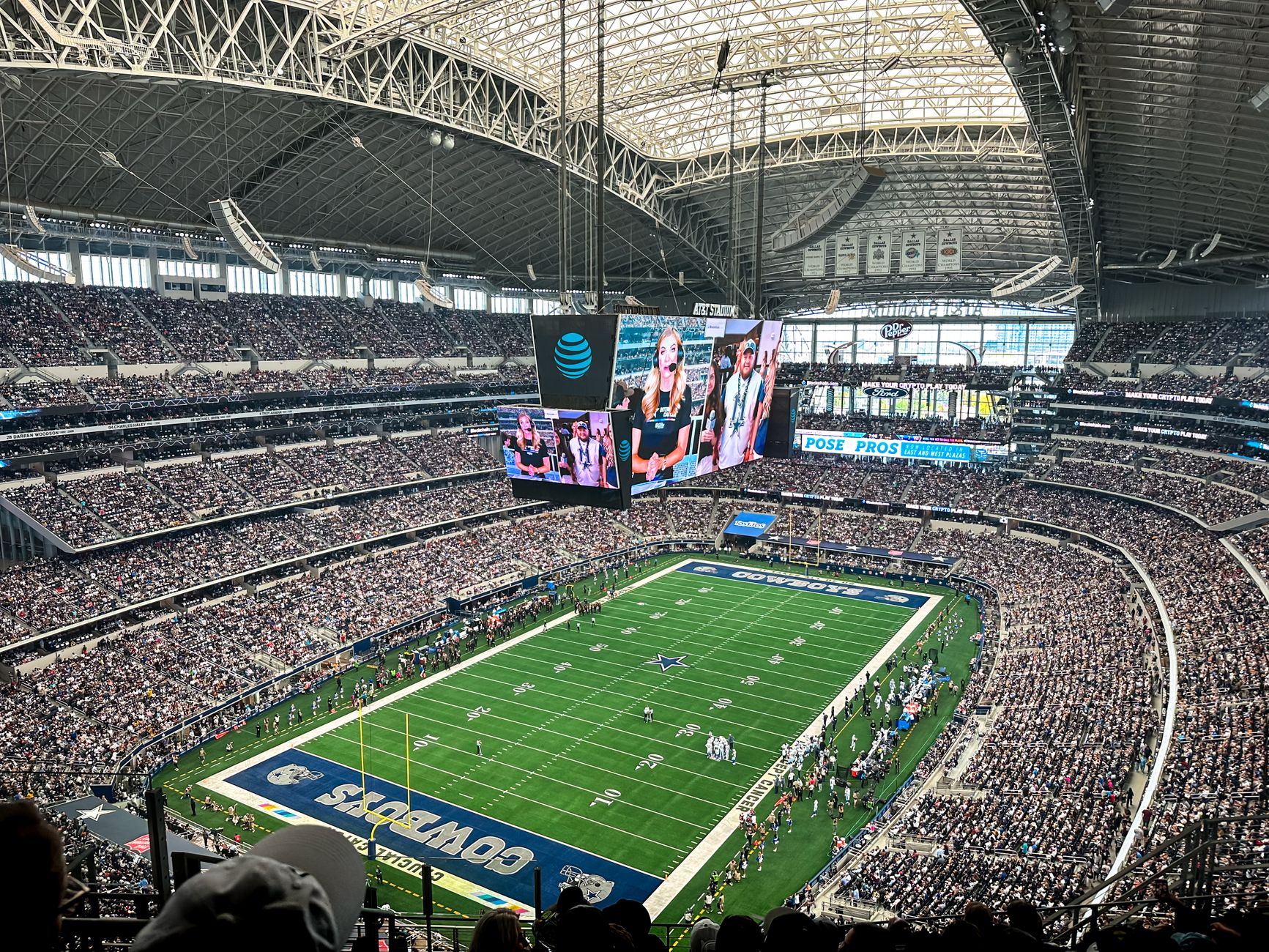
Photo by Terrance Barksdale on Pexels
For more in-depth coverage of the sports calendar, from NFL playoff breakdowns to Rugby World Cup predictions, Learn More about the full content library at Coach's Corner and start building sharper cross-sport analysis today.